
Many Ottawa dog owners skip grooming appointments once the snow arrives, figuring a longer coat will keep their dog warm. It's an understandable instinct, but winter is often when dogs need regular grooming most.
The short answer: most dogs in Ottawa should see a groomer every 4 to 8 weeks through the winter, depending on their coat. Long, curly and drop-coated breeds sit at the shorter end. Short-coated and double-coated breeds can stretch a little longer, as long as you brush at home.
Below, our groomers at Paw Bliss explain how often to book by coat type, why Ottawa's snow and road salt change the routine, and what to do at home between visits.
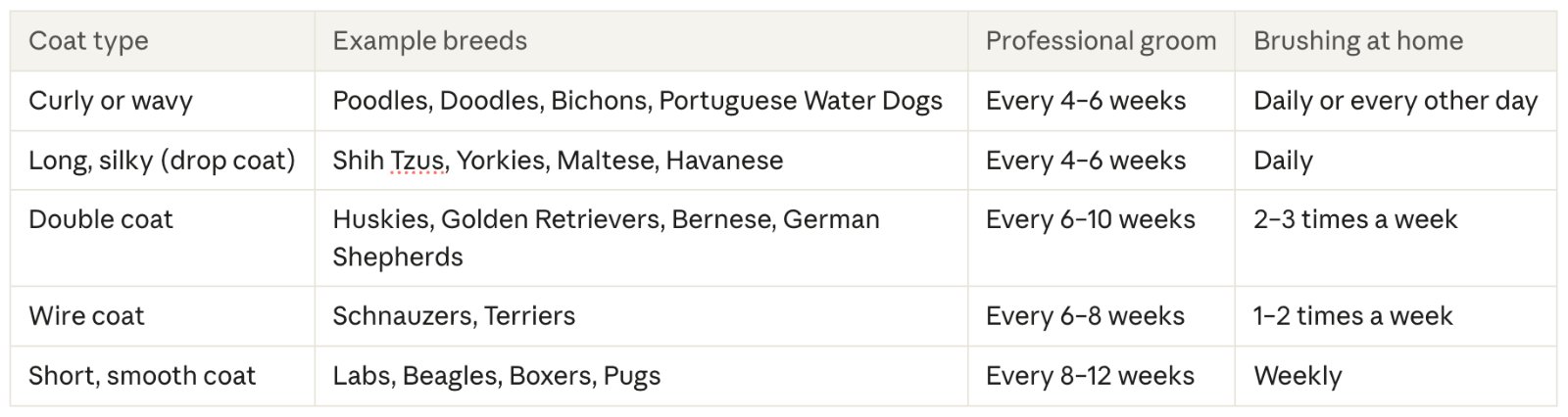
How Often to Groom Your Dog in Winter, by Coat Type
Use this as a starting point. Your groomer can fine-tune it after seeing your dog's coat and lifestyle.
Whatever the coat, nails usually need trimming every 3–5 weeks in winter, because dogs spend less time wearing them down on dry pavement.
Why Ottawa Winters Change Your Dog's Grooming Needs
Wet snow causes mats. Snow clumps in the coat, melts, then dries in tangles. Mats hold moisture against the skin, pull painfully, and actually make a coat worse at insulating. A matted coat is a colder coat.
Road salt and de-icers irritate skin and paws. Ottawa's sidewalks and roads are heavily salted all winter. Salt dries out paw pads, can cause cracks, and gets licked off and swallowed.
Dry indoor heat dries the skin. Furnace-heated homes lower humidity, which can lead to flaking, itching and dull coats.
Ice balls form between the toes. Long fur between paw pads collects snow that freezes into hard balls, making walks uncomfortable and slippery.
Shorter days mean less outdoor wear. Less time on pavement means nails grow longer, which affects how your dog stands and walks on icy surfaces.
Should you shave your dog for winter?
No, and you don't need to keep them long and shaggy either. The goal is a coat that's clean, dry and tangle-free. A well-kept coat of moderate length insulates better than a long, matted one. Never shave a double-coated breed like a Husky unless a vet or groomer advises it for a medical reason.
Winter Paw Care: Protecting Against Ottawa Road Salt
Paws take the hardest hit in an Ottawa winter. A few habits make a big difference:
Keep paw fur trimmed level with the pads so snow and salt can't build up. Ask for a "paw tidy" at every groom.
Rinse paws after every walk with lukewarm water, then dry thoroughly between the toes.
Use a paw balm or wax before walks to create a barrier against salt and ice.
Try dog boots for long walks on heavily salted streets. Most dogs adapt within a few outings.
Check pads weekly for cracks, redness or cuts. See your vet if you notice bleeding, swelling or limping.
Use pet-safe ice melt on your own steps and driveway.
Your At-Home Winter Grooming Routine
Professional grooming works best when you keep the coat in shape between visits.
Brush on schedule. Follow the frequency in the table above. Brush down to the skin, not just the surface, paying extra attention to legs, belly, armpits and behind the ears where mats start.
Dry your dog completely after snowy walks. Towel off, then use a blow dryer on a cool or low setting for thick coats. Never let a dog stay damp for hours.
Bathe less, rinse more. A full bath every 4–8 weeks is plenty for most dogs in winter. Use a moisturizing dog shampoo, and dry fully before going outside.
Moisturize from the inside. Ask your vet whether an omega-3 supplement makes sense for dry winter skin.
Keep up with nails. If you hear clicking on the floor, they're too long.
Signs Your Dog Needs a Groom Now
Don't wait for the calendar if you notice any of these:
Mats or tangles you can't brush out, especially behind the ears or under the legs
Snow or ice balls sticking to the legs and paws after every walk
Nails clicking on the floor, or your dog slipping on smooth surfaces
A musty smell that lingers after the coat dries
Constant licking or chewing at the paws
Flaky, itchy or red skin
Fur covering the eyes or growing into them
Frequently Asked Questions
Is it okay to groom my dog in winter?
Yes. Regular winter grooming prevents mats, protects paws from salt and keeps skin healthy. A good groomer will dry your dog completely before they head back into the cold.
Should I let my dog's coat grow longer in winter?
A little extra length is fine for many breeds, but only if you can keep it brushed and mat-free. Ask your groomer for a slightly longer "winter trim" rather than skipping appointments.
How often should I bathe my dog in winter?
For most dogs, every 4–8 weeks is enough. Rinse salt off paws and legs after walks instead of doing full baths, and always dry thoroughly.
How do I get ice balls off my dog's paws?
Don't pull them. Soak the paws in lukewarm water until the ice melts, then dry well. Keeping the fur between the pads trimmed stops them forming.
Is road salt dangerous for dogs?
It can irritate and crack paw pads, and swallowing it from licking can upset your dog's stomach. Rinse paws after walks and contact your vet if your dog shows vomiting, drooling or lethargy after salt exposure.
Book a Winter Groom at Paw Bliss in Ottawa
At Paw Bliss, every winter groom includes [a paw pad trim, nail trim and a full dry before your dog heads home — confirm what's included]. We'll recommend a schedule that fits your dog's coat and your routine, so they stay comfortable all season.
We welcome dogs from Nepean, Barrhaven, Kanata, Westboro and across Ottawa.
Book your dog's winter groom online or call us at (613) 983-5188.